Dear reader,
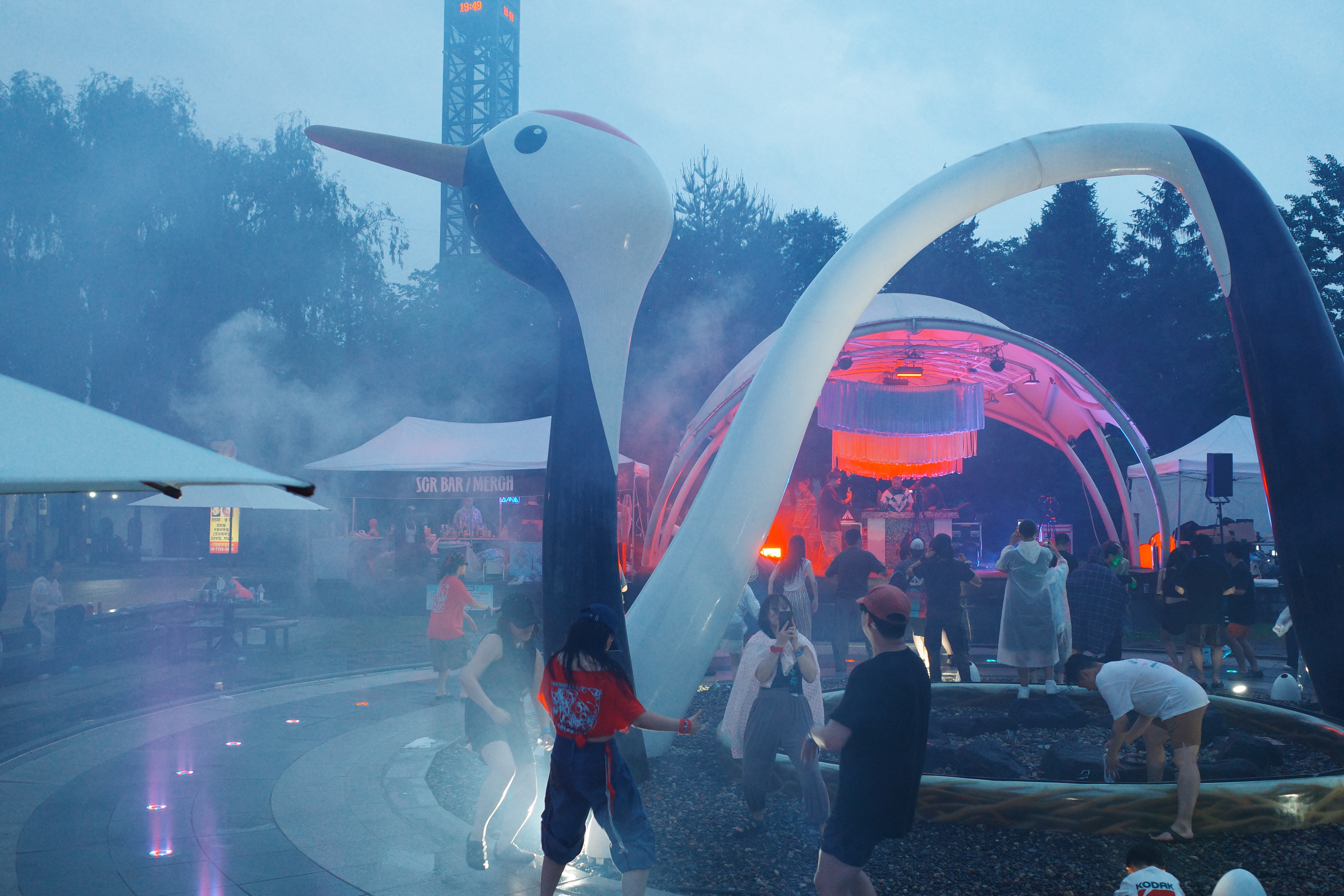
As I write this letter, it’s raining in Seoul. July in Korea is the most humid time of the year, and also the greenest. Today I want to tell you about the name of this season: jangma (장마). If you’re planning a summer trip to Korea, this is a word worth knowing.
So, what is jangma?

Jangma is Korea’s rainy season, running roughly from late June to late July every year. Cold, damp air from the north meets hot, humid air from the south over the Korean peninsula, forming a long, stalled band of rain clouds. That band drifts slowly up and down the country, bringing weeks of rain.
For Koreans, jangma is not just weather. It’s a feeling of the season: the sticky air, the umbrella stands at every shop entrance, the sound of rain against the windows. And there’s a food that Koreans think of almost by reflex on rainy days: pajeon (a crispy green onion pancake) with a bowl of makgeolli, Korea’s milky rice wine. Some say it’s because the sizzle of the pancake in the pan sounds like falling rain. Either way, it’s the national combo of the rainy season.
But jangma isn’t what it used to be
Over the past several years, Korea’s rainy season has been changing in ways you can actually feel. Because of climate change, the old pattern of steady drizzle stretching over weeks has been giving way to something different: sudden, intense downpours that hit for an hour or two and then stop. The number of rainy days has actually gone down, but when it rains, it pours much harder. It’s now common for one neighborhood to get flooded while another part of the same city stays dry.
The shift has been dramatic enough that the Korea Meteorological Administration stopped officially announcing the start and end dates of jangma. Korean meteorologists are even debating whether the concept of jangma needs to be redefined. Some people say Korea’s summer rain is starting to resemble the squalls of Southeast Asia.
For travelers, this change means one thing: Korean weather during jangma is hard to predict. Even if the forecast says rain, it rarely rains all day. And even on a clear forecast, the sky can suddenly open up.
If you’re traveling to Korea during jangma
So should you cancel your trip? Not at all. Here’s my advice as a local.
1. Build one “indoor card” into each day of your itinerary. Museums, galleries, big bookstores, and the cafés Korea is famous for. Seoul is not a city that runs out of things to do when it rains. When a downpour hits, locals simply step into the nearest café and wait it out. These sudden showers usually pass within an hour or two.
2. Brace yourself for the humidity. During jangma, it’s the humidity that gets you, not the temperature. Breathable clothes and a spare T-shirt go a long way. Indoor spaces are heavily air-conditioned, so a light outer layer is worth packing too.
3. Enjoy Korea in the rain. Palaces with thinner crowds, hanok cafés wrapped in the sound of rain, and the pajeon and makgeolli I mentioned earlier. There is a side of Korea you can only meet during the rainy season. Do what the locals do: find a pancake place, order a bowl of makgeolli, and listen to the rain. You might even start to welcome it.

One more thing
When jangma ends, Korea’s summer moves into its real heat wave. From late July through August, the days stay hot and humid. If you’d rather travel in cooler weather, early to mid June (just before jangma) or September and beyond may be the better choice.
See you in the next letter.
From a rainy Seoul, whigoori

Leave a Reply