Dear reader,
Summer in Korea is brutally hot. The temperature itself is high, but what really gets you is the humidity. The air turns damp and heavy, and even a short walk leaves you drenched in sweat. That’s the Korean summer. And there is one dessert Koreans reach for all season long to survive it. Today, I want to tell you about bingsu (빙수).
So, what is bingsu?
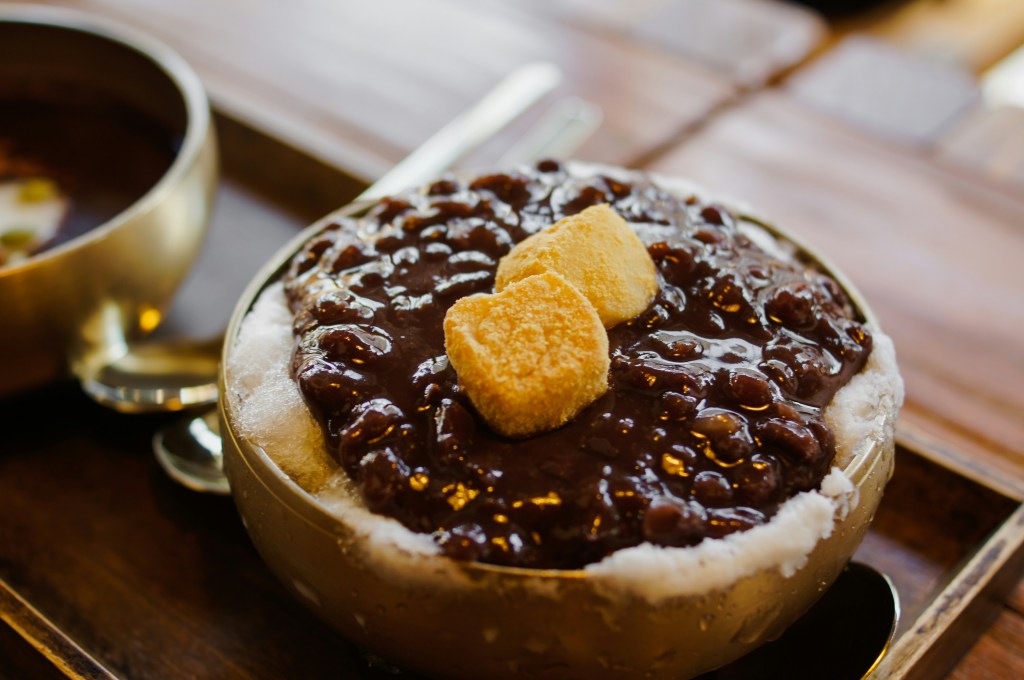
Bingsu is Korea’s summer dessert: finely shaved ice piled high and topped with something sweet. The basic structure is simple. Ice, and toppings on the ice. But on top of that simple structure, Koreans have built an astonishing range of variations.
One thing to know first: bingsu is not a dessert you eat alone. One big bowl, several spoons. Sharing a single bowl with friends, family, or a date sitting around it is how bingsu works in Korea. Ordering one giant bingsu at a café and clinking spoons over it is a classic scene of the Korean summer.
The old style: patbingsu
The original form of bingsu is patbingsu, shaved ice topped with sweet red beans (“pat” means red bean in Korean). The custom of eating shaved ice itself goes back a long way. Records from the Joseon dynasty tell of kings sharing precious ice with their officials in summer, who would crush it and eat it with fruit. The patbingsu we know today took shape in the early 20th century, and it has been evolving in its own Korean way ever since.
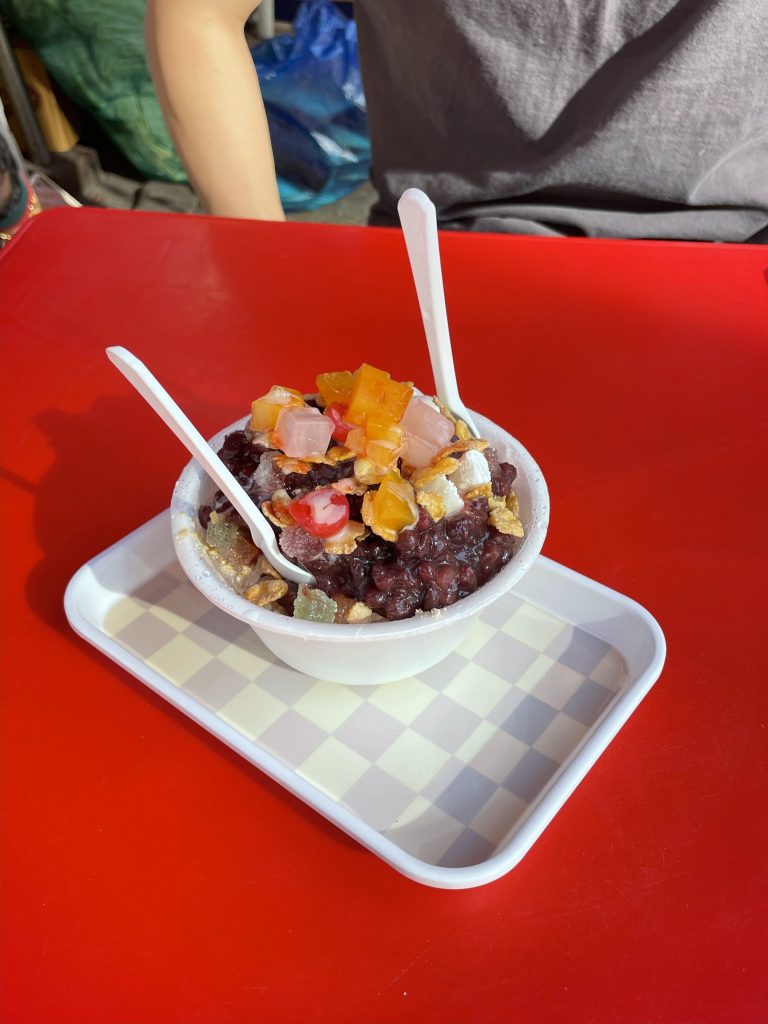
The old-school patbingsu my parents’ generation remembers was much rougher than what you see now. Coarsely shaved ice with red beans, chewy rice cake, misugaru (roasted grain powder), condensed milk, plus colorful jelly cubes and canned fruit. It was far from refined, but that retro clumsiness was exactly its charm. Some shops still keep this style alive, and for Koreans it’s the taste of childhood memories.
The modern style: from snowflake ice to hotel bingsu
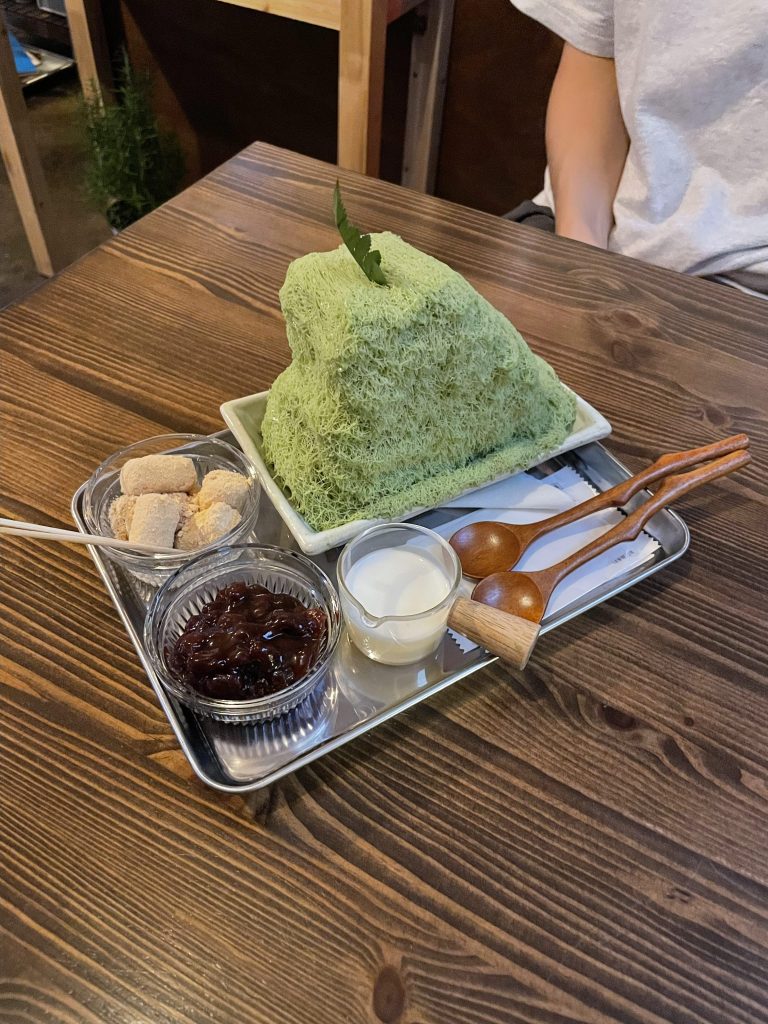
Modern bingsu has evolved into something else entirely. The biggest innovation is snowflake ice. Instead of water, frozen milk is shaved into layers so fine and soft that they melt away the moment they touch your tongue. Once snowflake ice arrived, bingsu transformed from “cold ice” into “a soft dessert.”
The world of toppings exploded too. Injeolmi bingsu covered in roasted soybean powder and rice cake, mango bingsu piled with fresh mango, tiramisu bingsu, even melon bingsu served in half a melon as the bowl. Every summer, cafés compete with their own signature creations. Luxury hotels in Seoul sell bingsu topped with premium fruit for around 100,000 won (about 75 USD) a bowl, and people line up for it. It makes the news every single summer. A bowl of shaved ice has become the front line of Korean dessert culture.
How to enjoy bingsu in Korea
My advice for travelers splits into two directions.
If you’re curious about the modern styles, go to a café. In summer, virtually every café in Korea serves its own bingsu. From bingsu franchise chains to small neighborhood cafés with creative takes, the options are endless. Just look for the word “bingsu (빙수)” on the menu.
If you’re curious about the old style, go to a rice cake shop. Unexpected, right? Among the shops selling tteok, Korea’s traditional rice cakes, some serve old-fashioned patbingsu in summer only. Handmade rice cake and red beans on shaved ice, exactly the way it was decades ago. It’s not glamorous, but it’s the taste Koreans call “the real one.” Most of these places are known only to locals, with barely a tourist in sight. If you want to experience a truly local Korean summer, this is the way.
On a sweltering summer day, share a bowl of bingsu with someone across the table. The Korean summer might just start to feel lovable.
See you in the next letter.
From Seoul, whigoori
 Living at my own pace, exploring a wide world.
Leave a comment