Dear reader,
This letter is going to be a little different from the usual ones. Not travel information, not a culture story. Just something honest about what’s been on my mind every day lately.
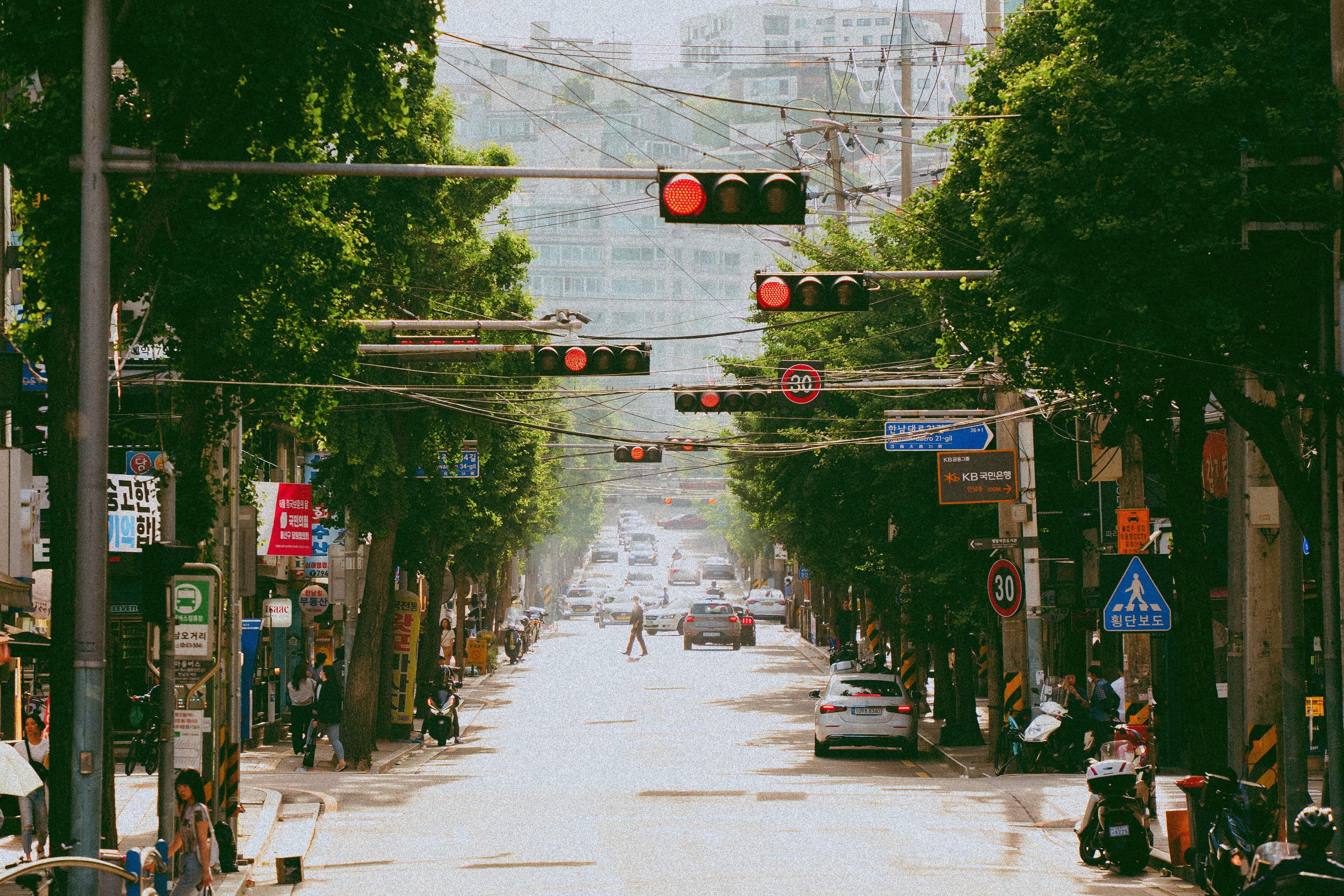
This summer in Korea has been brutally hot. I was born and raised in Korea, and I’ve said “it’s so hot” every summer of my life. But these past few years, and especially this year, feel different. I already knew summers were slowly changing, but I don’t remember a summer like this one. And right now, as I write this letter, Seoul is under an extreme heat critical warning (폭염중대경보).
Seoul, today

This critical warning tier is actually brand new this year. Korea’s Meteorological Administration overhauled its heat warning system for the first time in 18 years, deciding that the old two-tier system of advisory and warning could no longer keep up with how severe the heat had become, so it created a new top tier. It kicks in when an area already at heat warning level sees a heat index of 38°C, or an actual temperature of 39°C or higher, even for just one day. The message behind it is blunt: stop outdoor activity immediately, for your survival.
Less than two months after this new tier was created, it’s already been triggered multiple times. Late last month, Yangsan in South Gyeongsang Province hit 41.4°C, the highest temperature ever recorded in Korean weather history. Crossing 40°C in July had also never happened before. The government raised its heat wave crisis alert to the highest level, “serious,” and I saw news that it had stayed there for four straight days. Over the past five years, Korea has averaged 19 heat wave days and 14 tropical nights a year nationwide, two to three times more than in the 1970s. And this year’s tropical night count has already surpassed even that, setting an all-time record since record-keeping began in 1973.
Other countries weren’t spared either

Watching the news, I realized this isn’t just a Korean problem. Europe went through its heat wave earlier this summer, and it was even more brutal. In June, Andújar in Spain hit 45.1°C, and Pissos in France reached 44.3°C, the highest temperature ever recorded in French weather history. When I read that this heat wave had killed more than ten thousand people across Europe, I sat there stunned for a while. More than 5,000 people died in Germany alone, more than 2,000 in France. It was a number that made the climate crisis feel like something no longer distant, not a problem for some other country or some future date.
The ocean wasn’t spared either. I read an analysis showing that the area covered by marine heat waves worldwide had already exceeded projections. The atmosphere and the ocean are both running hotter than normal, at the same time.
Summer wasn’t supposed to go in this order
Korean summers used to follow a set sequence. Monsoon season starts in late June, the real heat arrives once it ends, and by August, typhoons move in and wash the heat away. This year, that entire sequence has been thrown off.
Even the monsoon arrived differently than usual. This year’s monsoon season in Jeju started 11 days later than average, the third-latest start since 1973, and central Korea’s started 6 days late too. High pressure systems that formed near Russia’s Ural Mountains and the Kamchatka Peninsula kept pushing cold air southward, which stopped the monsoon front from properly moving north. It’s no longer a monsoon that arrives and departs on a predictable schedule.
The heat itself has also gotten far worse than before. The records I mentioned above are the proof. The number of people treated for heat-related illness has been climbing sharply too, from 2,818 in 2023 to 3,704 in 2024 to 4,460 in 2025.
And even the typhoons are giving the Korean peninsula a wide berth. The typhoons that should be arriving by August are being blocked by a “double high pressure system” sitting over the peninsula this year. Typhoon Dolphin, the 13th named storm of the season, recently developed into a super typhoon, and most forecast models show it skirting past Korea entirely and making landfall in southern China instead. What’s more ironic is that even if a typhoon did arrive, some analyses suggest it might not relieve the heat at all, it could pump in more moisture and make the heat wave last even longer. The typhoons we always counted on to wash the heat away might no longer be able to play that role.
The thought that keeps coming back

Honestly, I find myself thinking about this a lot these days. If summers like this keep happening, will I still be able to live in Korea? If the nights when you can’t sleep without air conditioning keep multiplying every year, and if even walking outside becomes dangerous for stretches of the summer, what kind of summers are we heading toward in this country?
I don’t have the answer. But one thing is certain: this isn’t just my problem, or Korea’s problem alone. A summer where more than ten thousand people died in Europe, where ocean temperatures are exceeding projections, where even Korea’s typhoons can’t do what they used to do. This is the era we’re living in right now.
There’s no tidy conclusion to this letter. I just wanted to share an honest thought that came up while living through this summer. And I want to ask you something. What’s summer like where you are? Is it changing there too? I’d love to hear, in the comments, how each of us is finding a way to live through this era of climate crisis.
See you in the next letter.
From a sweltering Seoul, whigoori

Leave a Reply